
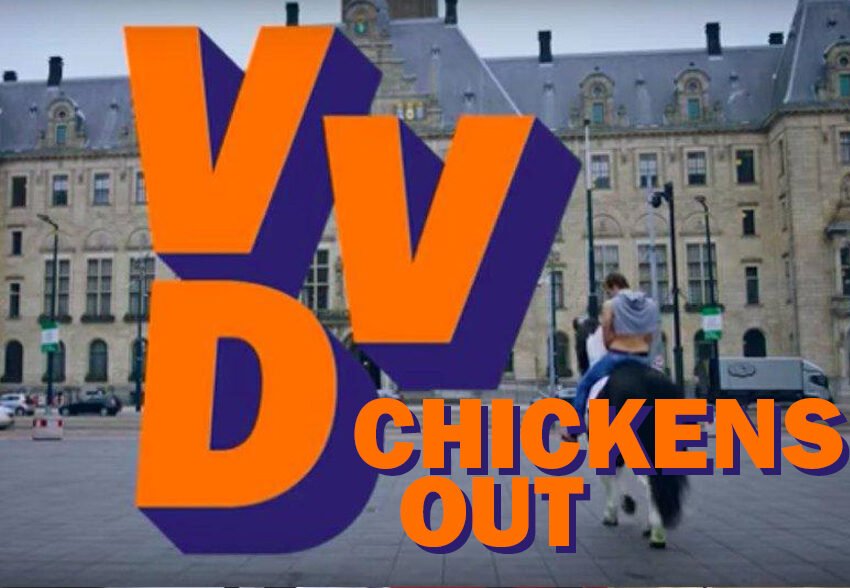
Rotterdam – Ten days ago we already wrote about the difficult coalition formation as part of a larger article (“Rotterdam bureaucracy expanded significantly in past two terms”), and we feared this outcome at the time. That fear has now become reality: the talks between PRO (GroenLinks–PvdA), D66, VVD and DENK have ended after the VVD walked away from the negotiating table.
Formateur and former PvdA heavyweight Diederik Samson may now be asked to begin talks with ChristenUnie, 50PLUS and the CDA to form a broad coalition. A second option is an even broader nine‑party progressive coalition including SP, Volt and the Partij van de Dieren, replacing DENK. The latter option is preferred by the Havennieuws editorial board, as it is time for things to change — and everyone agrees that change is needed.
924 words – 5 minutes
Repression and Stagnation
For the past two decades, Rotterdam has been known for its unprecedented repression. The dossiers below illustrate how policy became stuck, how residents were squeezed, and how the city missed opportunities.
– Demolishing neighbourhoods, families on the street
Great neighbourhoods such as the Tweebosbuurt — with a botanical garden, a metro station, a swimming pool and a weekly market — and the idyllic Swedish donated white houses of Wielewaal, where you could still hear birds singing, were not spared. Homes were demolished rücksichtslos, people ended up on the street, and social safety nets were destroyed. As a result, entire families have been left homeless in recent years.
– Economy at a standstill
The economy has also come to a halt. Of course, there are many causes beyond Rotterdam’s control, but appointing a Leefbaar Rotterdam councillor as Port Alderman was asking for trouble. Leefbaar Rotterdam has no representation in the Province, nor in the First or Second Chamber of the Parliamant in The Hague, meaning it cannot defend Rotterdam’s interests nationally — let alone in Brussels, where the interests of thousands of companies and nearly 200,000 workers in Europe’s largest port must be secured.
– Smaller margins, more deaths
Port workers have felt the consequences firsthand. Since 2000, almost every year has seen one or more fatal accidents in the Port of Rotterdam. See also the Havennieuws.nl C. Steinweg Doden Monitor, named after the company C. Steinweg, which has recorded at least 10 fatal and countless seriously injured victims over the past 26 years.
– Fewer trams, buses and waterbuses
And to make it even worse, all those residents must now cope with far less public transport. While every other city has invested in public transport as an alternative to cars, Rotterdam managed to completely scrap the Waterbus to the port and shorten or eliminate a large number of bus and tram lines.
– Rotterdam Festivals
Even iconic Rotterdam festivals such as the Love Parade, the Veronica Beach Festival, and even the Rotterdam Swim — the oldest city swim in Europe — were banned after 14 years, with help from Rotterdam Festivals. To make matters worse, a small group of civil servants receives endless subsidies and support from the Municipality of Rotterdam and Erasmus University Rotterdam to “keep the whole thing together”, see: D66 allows theft of Europe’s oldest city swim. The fact that nothing seems possible anymore has led more and more young people to leave the city disillusioned. The new movement Rotterdamse Festivals aims to make these legendary festivals and events possible again for the city and its residents.
– Environment pays the price
And all of this comes at the expense of the environment. The promised nature compensation for the construction of the Second Maasvlakte will likely never materialise, and the most polluting companies in Rotterdam remain untouched.
Broad Coalition – New Momentum
A broad coalition of progressive and innovative parties could give the city New Momentum. Conservative parties Leefbaar Rotterdam, VVD, FVD and DENK would then end up in the opposition based on the distribution below.
Election Results
| Coalitie | Seats (votes) | Opposition | Seats (votes) |
|---|---|---|---|
| PRO (GL – PVDA) | 11 (46.542) | Leefbaar Rotterdam | 11 (43.248) |
| D66 | 5 (22.689) | VVD | 5 (20.256) |
| CDA | 1 (7.189) | FVD | 2 (10.161) |
| PVDD | 1 (6.234) | DENK | 4 (18.591) |
| Volt | 1 (6.171) | ||
| 50PLUS | 1 (5.521) | ||
| CU | 1 (5.074) | ||
| SP | 1 (5.055) | ||
| BIJ1 | 1 (4.195) | ||
| Totaal | 23 zetels | 22 Zetels |
Aldermen and College Secretary
The broad coalition would need to reduce the huge number of Aldermen from nine to four and introduce the College Secretary. This would end exotic portfolios such as Tim Versnel’s: “Work & Income, National Programme Rotterdam South, EU Labour Migrants, City Bridge, Animal Welfare and Major Projects.”
This would also help to shrink the civil service. Rotterdam has more than 20,000 civil servants for fewer than 700,000 residents — roughly one civil servant per 35 residents. If you divide this absurd number by the number of streets in Rotterdam, you end up with nearly five civil servants per street, each earning an average of €96,000 per full‑time position.
These are the aldermanic and college secretary — similar to a Dutch staatssecretaris — who report to the college but also holds an independent, accountable role.
Jobs and Payments
Alderman (175.000 euro)
- Alderman for Economy, Work and Labour (PRO–PvdA)
- Alderman for Social Affairs, Culture and Health (CDA)
- Alderman for Neighbourhoods, Mobility and Environment (PRO–GL)
- Alderman for Education and Society (D66)
College Secretary (120.000 euro)
- College Secretary for New Economy (CU)
- College Secretary for International Relations (Volt)
- College Secretary for Social Neighbourhoods (SP)
- College Secretary for Schone Stad (PvvD)
- College Secretary for Youth and Young People (BIJ1)
- College Secretary for Elderly People (50 Plus)
In the old situation all Alderman earned together 9 x 172.000 = 1.548.000 euro. The new coalition will earn 4 x 175.000 + 6 x 120.000 = 1.420.000 euro. That saves the taxpayer 128.000 euro